 WebXR Image Tracking
What is WebXR Image Tracking
WebXR image tracking enables browsers to detect and track specific images in the real world through a device's camera, providing real-time position and orientation data to anchor virtual content precisely to physical markers like posters, packaging, or artwork.
By pointing the camera at a recognized image, the image tracking API continuously updates the spatial relationship between the virtual and physical elements, ensuring proper alignment even as the device or image moves.
Image tracking transforms static images into interactive AR triggers—allowing museum paintings to display overlaid information, product packages to reveal 3D animations, or business cards to show floating contact details—all through web standards without requiring users to download dedicated apps, making AR experiences instantly accessible through any compatible web browser.
Platform Support
Needle Engine supports image tracking across multiple platforms:
| Platform | Technology | Status |
|---|---|---|
| iOS (Safari, Chrome) | Native WebXR via App Clip | ✅ Full support |
| Android | WebXR Image Tracking | ✅ Supported (requires Chrome flag) |
| iOS (Alternative) | QuickLook Image Tracking | ✅ Supported via Everywhere Actions |
iOS: Native WebXR Image Tracking 🎉
NEW: iOS now supports native WebXR image tracking through Needle Go - iOS WebXR App Clip!
Users can experience your image tracking AR content instantly on iPhone and iPad via:
- QR codes
- Smart app banners
- Direct links
No app installation required – powered by ARKit for high-quality tracking.
Try it now • Learn more about iOS WebXR
Android: WebXR Image Tracking
Android devices support WebXR Image Tracking through Chrome with a browser flag enabled.
Enable WebXR Image Tracking on Android
On Android, turn on "WebXR Incubations" in Chrome Flags:
- Open Chrome on your Android device
- Paste
chrome://flags/#webxr-incubationsin the address bar - Enable the "WebXR Incubations" flag
- Restart Chrome
Live Demo
Start the scene below in AR and point your phone's camera at the image marker on a screen, or print it out.

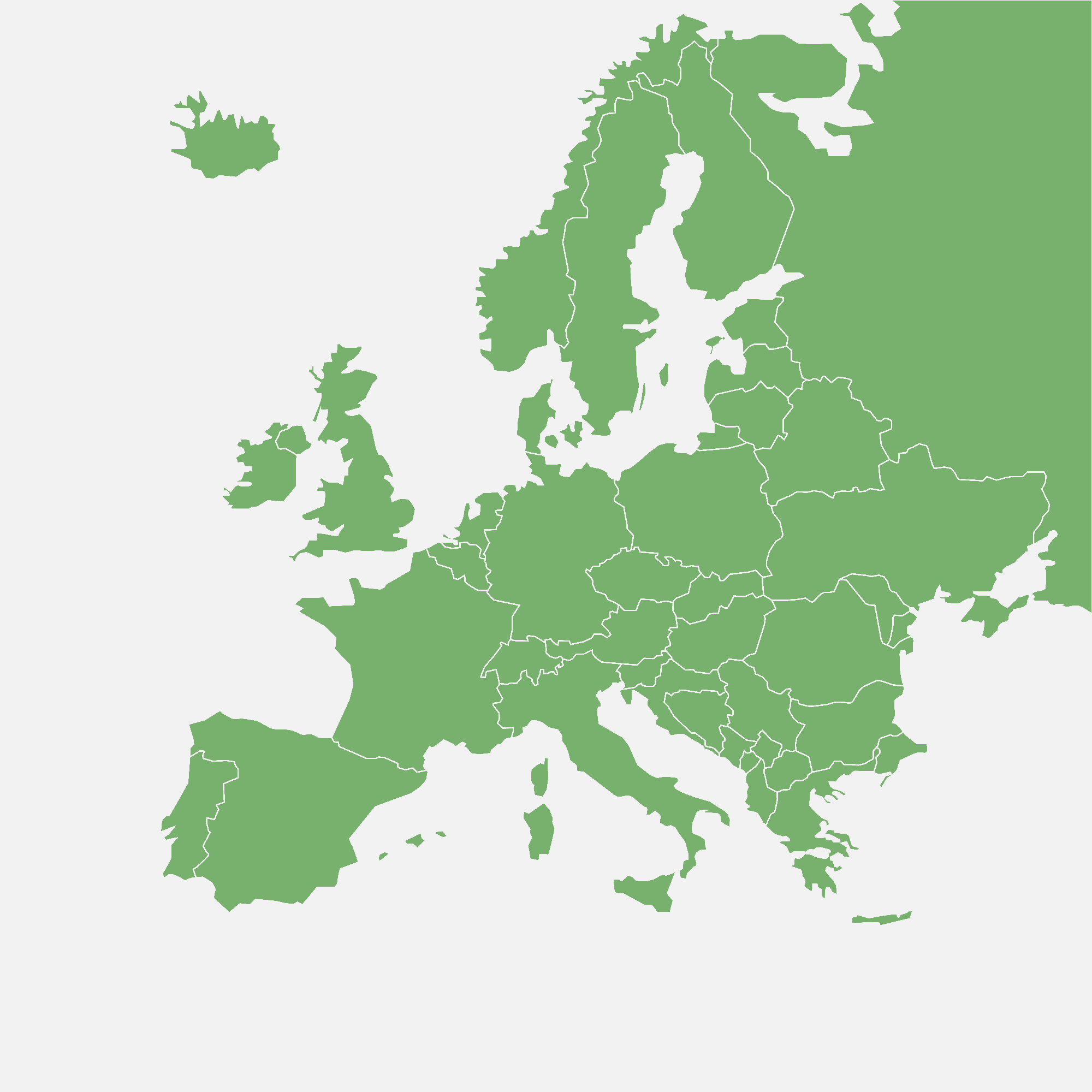
Download printable marker 1 (PDF) – Download printable marker 2 (PDF)
How to test:
- Open the demo on your device (iOS or Android)
- Tap the AR button to enter AR mode
- Point your camera at the marker image above
- Watch 3D content appear tracked to the marker!
Setup in Unity or Blender
Image tracking can be set up in both Unity and Blender by adding a WebXRImageTracking component to an object. Then add your images to the Tracked Images array.
 Unity Setup
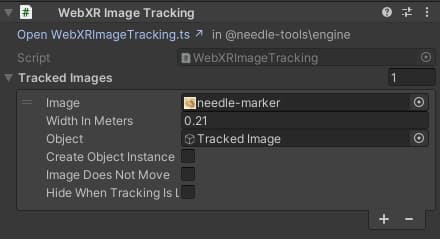 Image tracking component in Unity
Steps:
- Add a
WebXRImageTrackingcomponent to a GameObject - In the
Tracked Imagesarray, add your marker images - Assign content to display when each image is detected
- Export and test on device
 Blender Setup
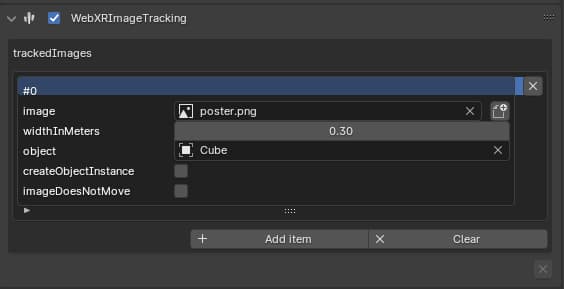 Image tracking component in Blender
Steps:
- Add a
WebXRImageTrackingcomponent in the Needle Engine panel - Add your marker images to the tracked images list
- Set up content to appear when images are detected
- Export and test on device
Technical Details
 iOS: Full Native Support ✅
iOS image tracking works through Needle Go App Clip with full ARKit support:
- ✅ No browser flags required
- ✅ No setup needed
- ✅ High-quality ARKit tracking
- ✅ Works in Safari and Chrome
- ✅ Instant access via QR codes or links
Your Needle Engine project works automatically on iOS with image tracking enabled. Learn more →
 Android: Browser Flag Required
Android uses the WebXR Image Tracking API, which is currently in draft specification status (Marker Tracking Explainer).
Requirements:
- Enable
WebXR Incubationsflag in Chrome (chrome://flags/#webxr-incubations) - Restart Chrome after enabling the flag
Tips
This is a temporary requirement while browser vendors finalize the specification. Once finalized, the flag won't be needed.
Alternative Approaches
If you need image tracking without WebXR support, consider these alternatives:
1. Everywhere Actions (iOS QuickLook)
- Works on iOS without App Clip
- Uses Apple's QuickLook with USDZ
- Limited to QuickLook capabilities
- Learn more about Everywhere Actions
2. Camera-Based Libraries These require camera access permissions and use local computer vision:
- Experimental AR.js integration by FireDragonGameStudio
- AR.js (open source)
- Mind AR (open source)
Tips
For the best user experience on iOS, we recommend using the iOS WebXR App Clip approach, which provides native ARKit tracking without requiring camera permissions or additional setup.
Use Cases
Image tracking opens up many creative possibilities:
Marketing & Advertising:
- Product packaging reveals 3D animations
- Posters come to life with video content
- Business cards show contact information in AR
Education & Museums:
- Paintings display historical context
- Textbooks show 3D models
- Exhibits provide interactive information
Retail & E-commerce:
- Product catalogs show 3D previews
- Magazine ads become interactive
- Store displays trigger AR experiences
Events & Entertainment:
- Concert posters show ticket info
- Movie posters play trailers
- Event badges trigger AR content
Best Practices
Image Marker Design:
- Use high-contrast images
- Include distinctive features
- Avoid repeating patterns
- Test at different sizes
- Ensure good lighting conditions
Performance:
- Keep tracked content lightweight
- Use texture compression
- Optimize 3D models
- Test on target devices
User Experience:
- Provide clear instructions
- Show the marker image prominently
- Handle detection/loss gracefully
- Test in various lighting conditions
Next Steps
Get Started:
- Unity Integration - Set up image tracking in Unity
- Blender Integration - Set up image tracking in Blender
- iOS WebXR Guide - Enable native iOS support
Learn More:
- Scripting Image Tracking - Access tracked images and objects from TypeScript
- XR Documentation - Full XR capabilities
- Everywhere Actions - Alternative AR approaches
- Deployment Guide - Publish your AR experience
Resources:
Need Help?
Join our Discord community or visit our Forum for support with image tracking and other AR features.